The Orion Evolution: Four Years of Evolution and 15 Hours of Integration on M42
20 Nov 2024By Akshay Kumar
The Orion Nebula (Messier 42) is often the first deep-sky object an astrophotographer captures. It is bright enough to be seen with the naked eye from a dark site and large enough to frame easily with basic telephoto lenses. However, that accessibility masks a deeply complex target. Because it is so bright, managing the dynamic range of the core while pulling out the faint, surrounding dust requires precise acquisition and careful processing.
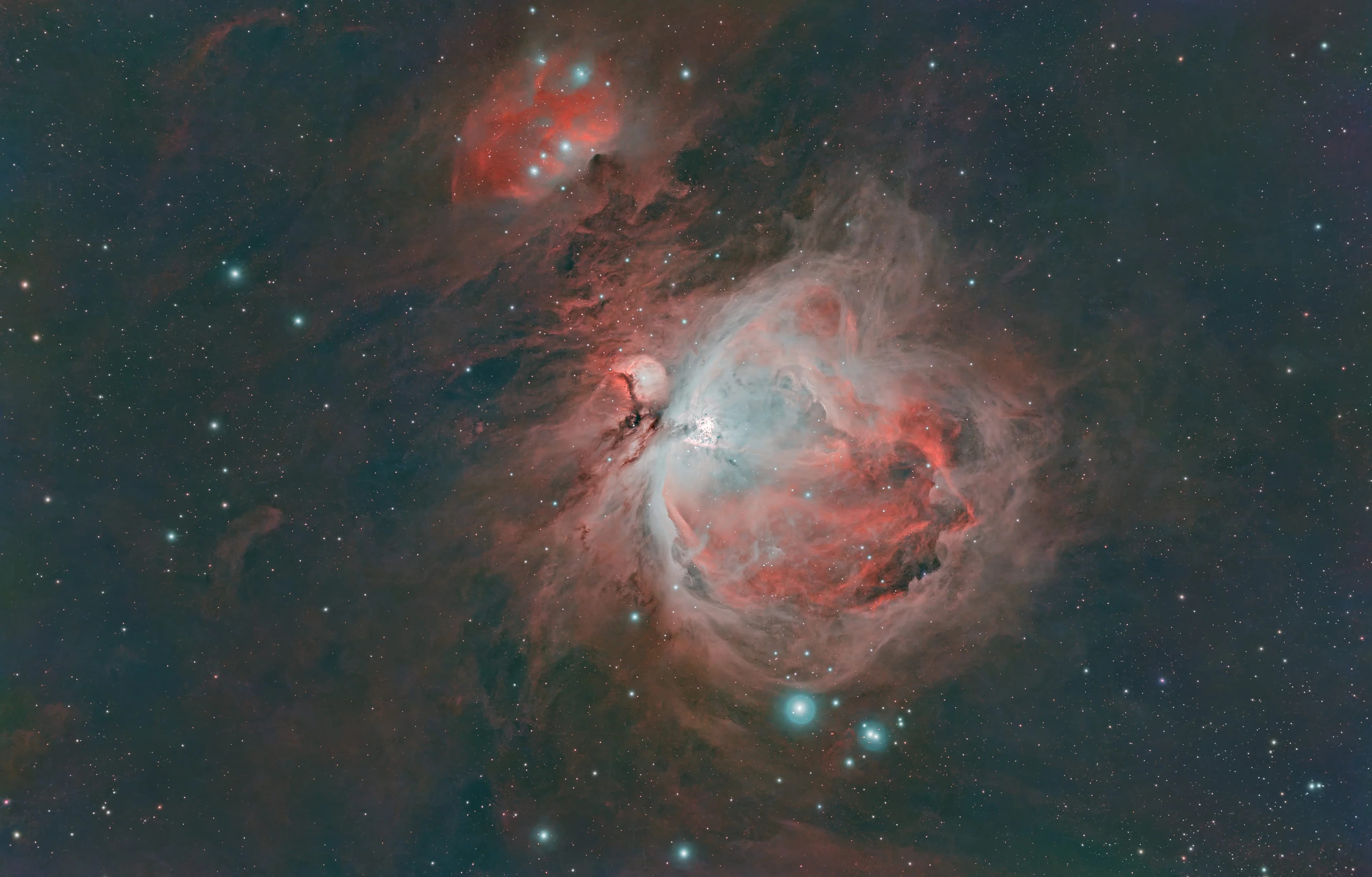
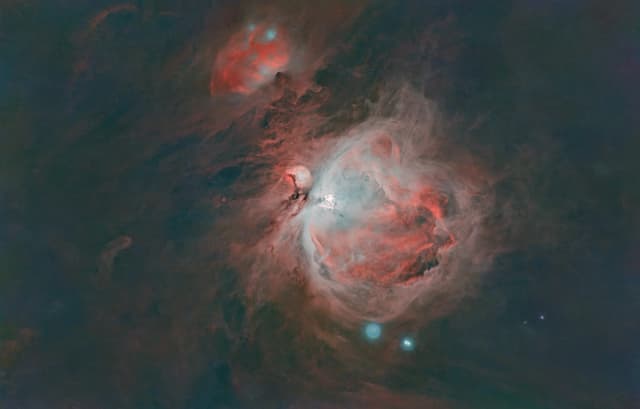
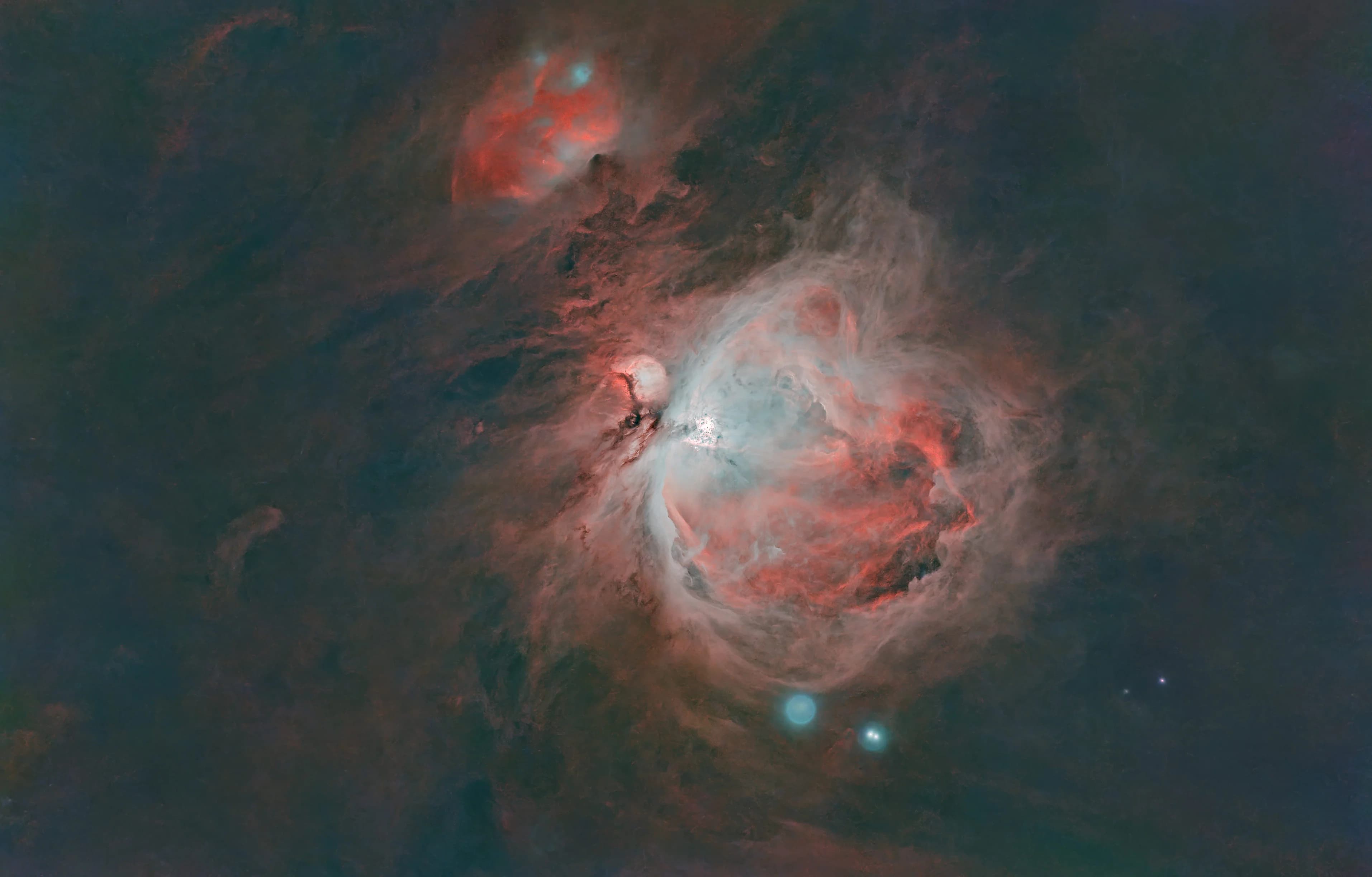
For me, M42 serves as a personal benchmark. It is a target I return to as my equipment and techniques evolve. The image below represents the culmination of four years of iterative learning. Captured over four nights in November 2024, this 15-hour integration reflects a complete overhaul in how I approach data acquisition, guiding, and signal processing from my Bortle 8 observatory.
Astrophysics of the Stellar Nursery
Located approximately 1,344 light-years from Earth, the Orion Nebula is one of the most active star-forming regions in our galactic neighborhood. The main nebula spans roughly 24 light-years across. In wide-field captures like this one, we can see the expansive molecular cloud complex connecting M42 to the Running Man Nebula (NGC 1977) positioned just above it.
The heavy dust lanes visible throughout the frame are the raw materials for new star systems. The nebula itself glows primarily because the vast clouds of hydrogen gas are being continuously bombarded and excited by the radiation from newly formed stars embedded within the dust.
The Baseline: DSLR and Kit Lenses (2020-2021)
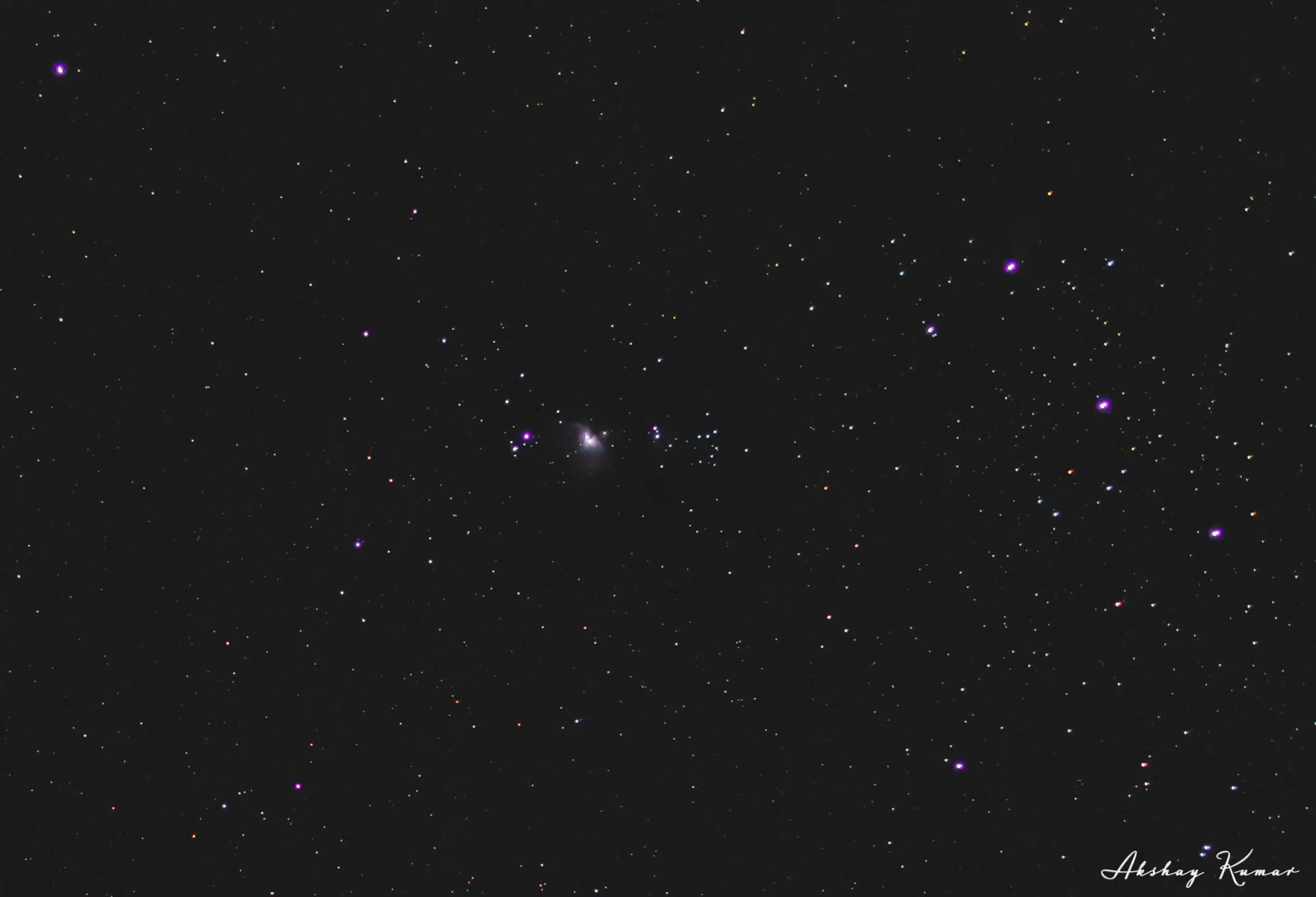
Every engineering pursuit requires a baseline. Back in 2020, my imaging journey began with a standard Nikon D5300 DSLR and a 50mm f/1.8 prime lens riding on an iOptron SmartEQ Pro mount. The resulting image was a modest wide-field view of the Orion constellation. The nebula appeared merely as a faint smudge, but capturing those photons directly onto my sensor proved the viability of the setup.
Wanting more resolution, I swapped the 50mm prime for a Nikon 200-500mm zoom lens pushed all the way out to 500mm. I was still using the D5300 and taking short, unguided exposures. I was astonished by the structural detail and color that emerged. This jump in focal length was a pivotal moment. It proved how much hidden data could be extracted with a tighter field of view and longer integration times.
Cooled Sensors and The Frosting Problem
As my optical requirements grew, I transitioned from a DSLR to a dedicated astrophotography camera. I acquired the ZWO ASI294MC Pro. This upgrade introduced active thermoelectric cooling to reduce thermal noise, but it also introduced a steep learning curve regarding calibration frames and equipment maintenance.
During an early imaging session with the ASI294MC Pro, a noticeable, dark blotch appeared consistently in the center of the acquired frames. After isolating the variables, I diagnosed the issue as moisture freezing directly onto the sensor window during the cooling process.
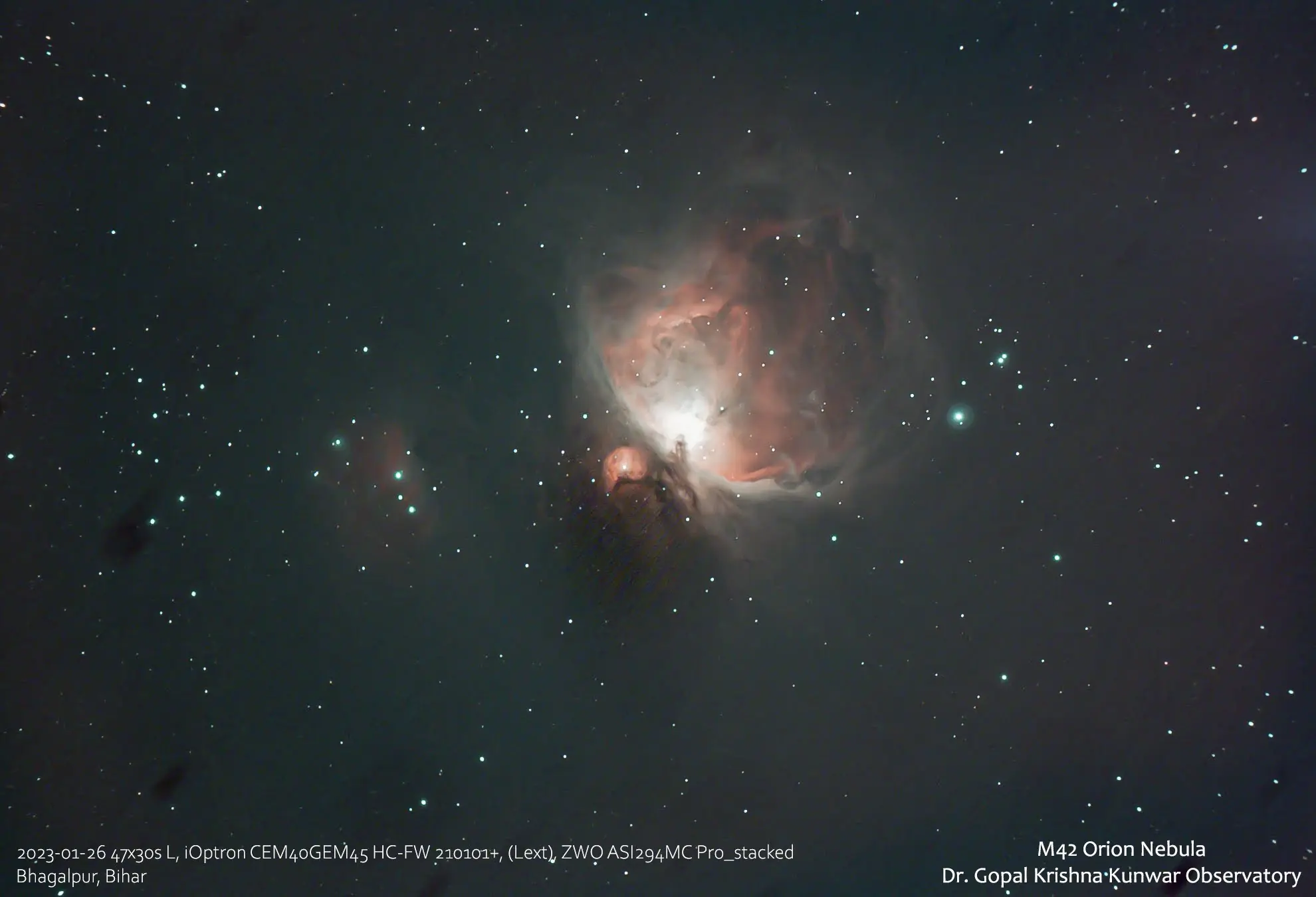
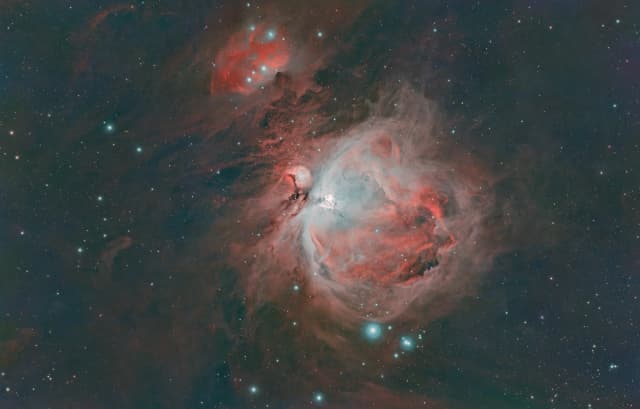
Moving to a dedicated cooled astronomy camera provided a massive leap in sensitivity, but it also demanded strict hardware upkeep. In this early, uncalibrated integration with the ASI294MC Pro, a distinct dark blotch is visible over the target. This artifact was caused by internal moisture freezing on the sensor window. Initially, I sealed the camera in a bag with desiccant to absorb the moisture. When that failed, I had to physically unscrew the camera body to access the sensor chamber and replace the internal desiccant tablets. It was a stressful but necessary lesson in the mechanical realities of long-exposure imaging.
Narrowband Acquisition in Bortle 8
Operating from a Bortle 8 zone heavily restricts broadband imaging. To cut through the urban light dome of Bhagalpur, I relied on the Optolong L-Extreme dual-narrowband filter. This piece of glass is highly effective at isolating the Hydrogen-Alpha and Oxygen-III emission lines, which constitute the bulk of the nebula's signal.
The trade-off for this contrast is the complete loss of natural broadband star colors. The stars in the current HOO palette appear largely monochromatic. Resolving this will require a separate imaging session dedicated entirely to capturing short RGB exposures without the narrowband filter, a project I plan to execute during the next winter observing season to layer natural star colors over the narrowband gas.
Controlling the Core: Dynamic Range
The Orion Nebula presents an extreme dynamic range problem. The Trapezium cluster is overwhelmingly bright compared to the faint, extended molecular dust spanning the rest of the field. For this 15-hour integration, I utilized 120-second exposures to gather sufficient signal on the dim outer structures without completely blowing out the core.
Processing required heavy use of masking and careful, iterative stretching to maintain the structural integrity of the central cavity. Separating the stars from the nebula early in the workflow allowed me to push the faint dust structures without bloating the stellar profiles. While this approach was successful, future revisions of this target will benefit from a high dynamic range composite. By blending the current 120-second data with a new set of 30-second sub-exposures, I can tighten the core resolution even further.
Mapping the Region
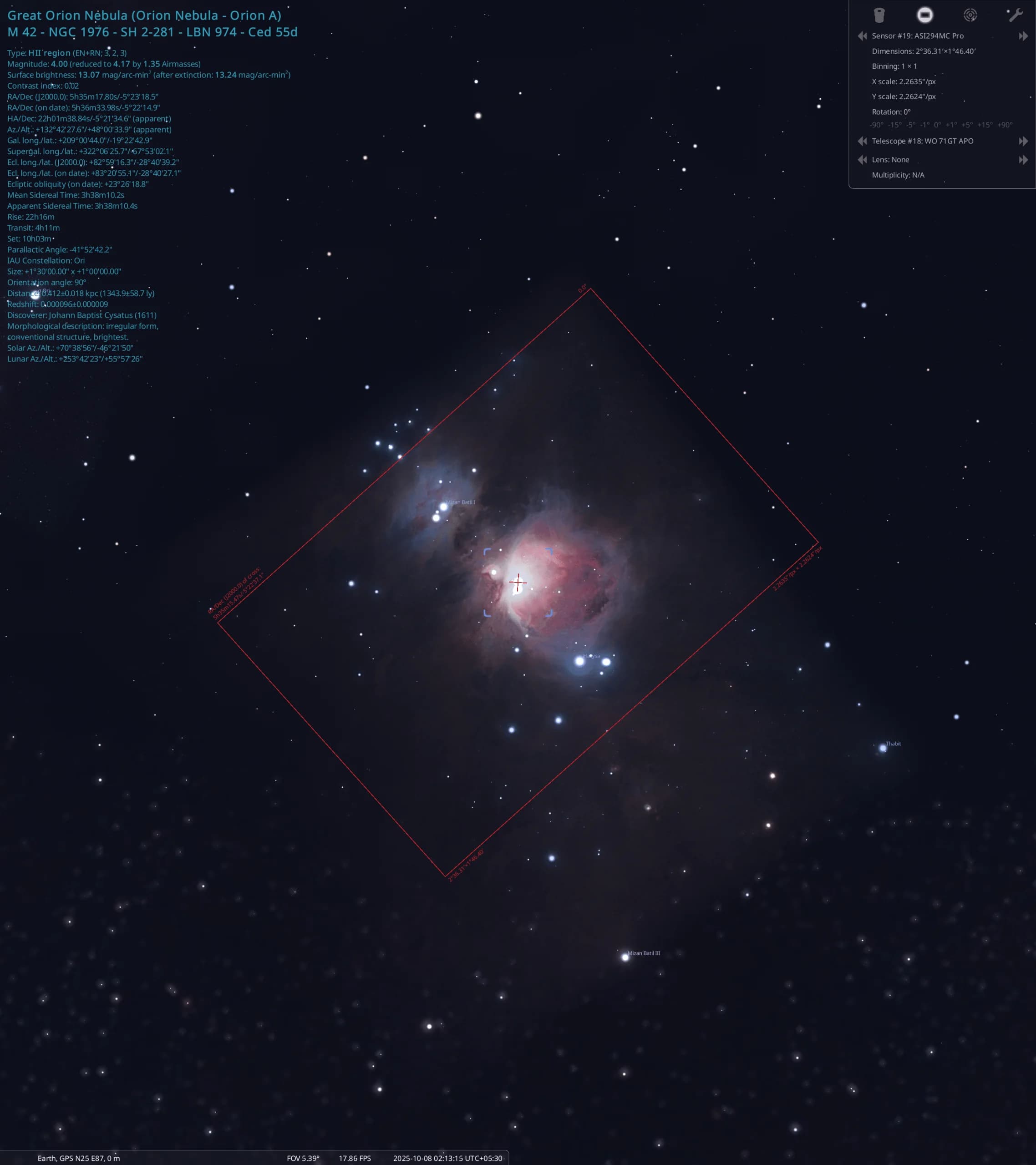
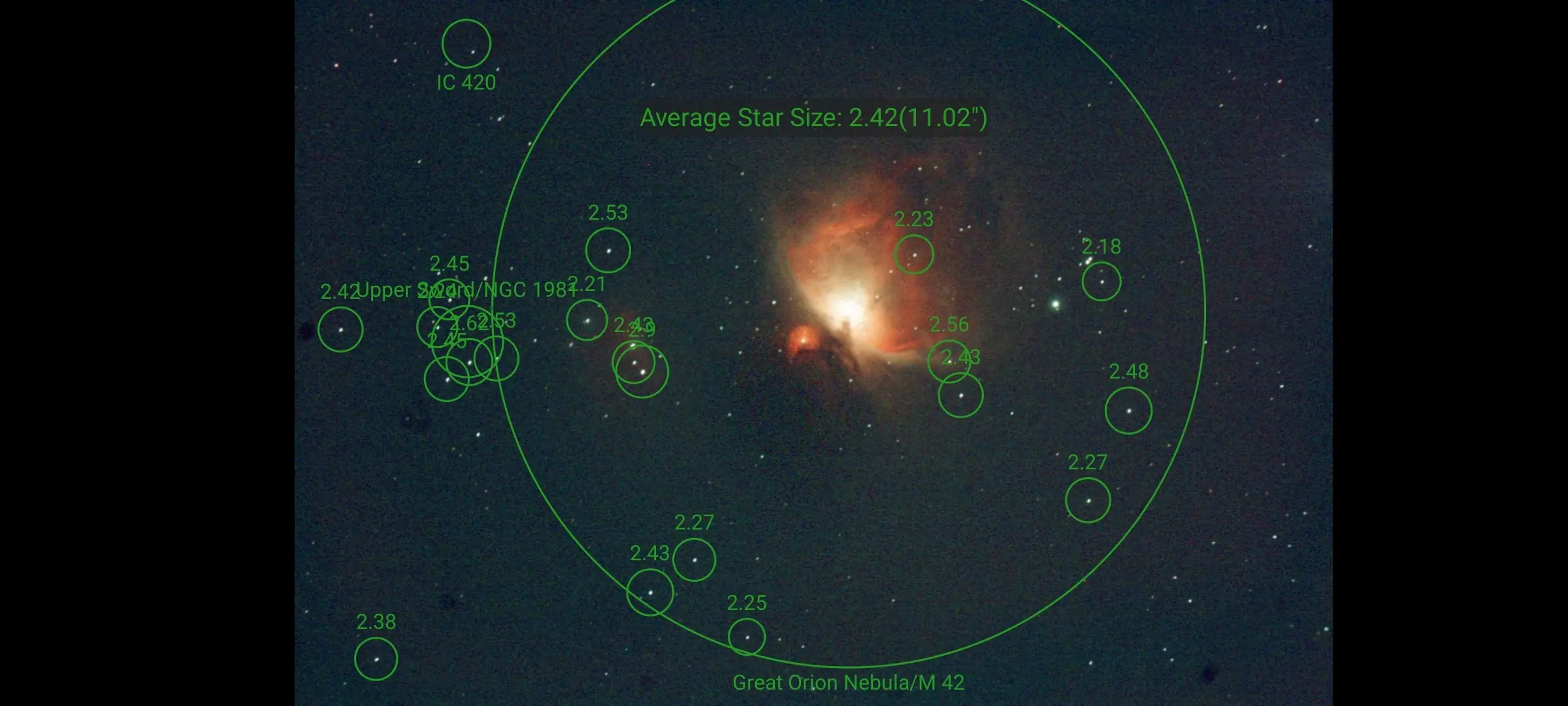
The wide field of view provided by the William Optics 71GT allows us to capture the broader astrophysical neighborhood. Just above the primary structure of M42 sits De Mairan's Nebula (Messier 43), separated by a dense lane of obscuring dust. Further north, the Running Man Nebula (NGC 1977) is clearly visible, reflecting the light of nearby hot, young stars. Plate solving this region reveals a dense catalog of distinct catalog objects and variable stars.
Acquisition Telemetry
- Target
- Messier 42 (Orion Nebula)
- Integration
- 15 Hours (491 x 120s)
- Telescope
- William Optics 71GT APO
- Camera
- ZWO ASI294MC Pro
- Mount
- iOptron CEM40
- Guiding
- WO 50mm + ASI120MM
- Filters
- Optolong L-Extreme
- Location
- Bhagalpur, India (Bortle 8)