Mapping the Auriga Complex: The Flaming Star and Tadpoles Nebulae
5 Mar 2026By Akshay Kumar
The Auriga Molecular Cloud: A Line-of-Sight Illusion
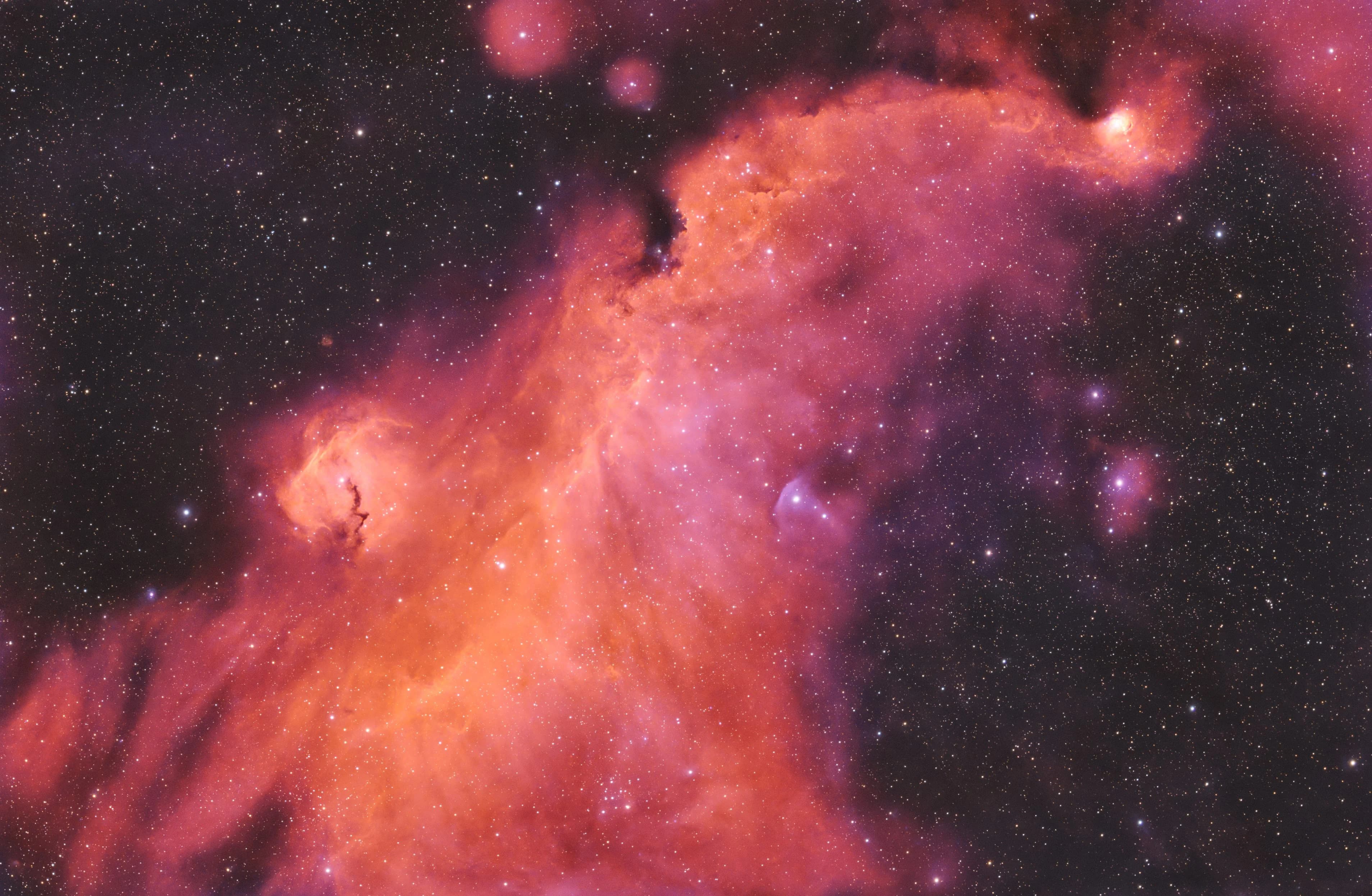
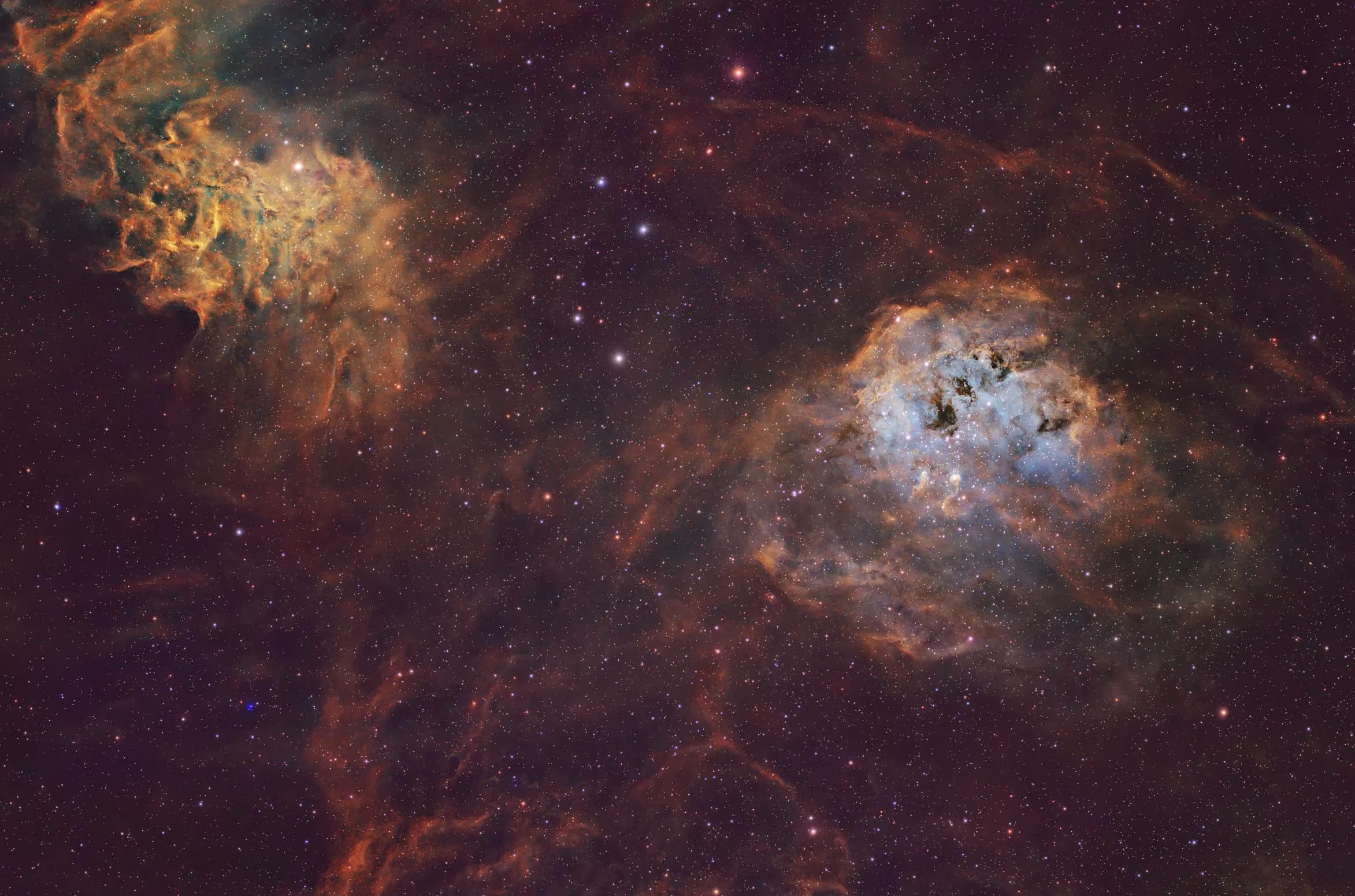
The Auriga constellation hosts a massive concentration of ionized gas and molecular dust positioned along the Orion spur of the Milky Way galaxy. When framing this specific region, the field of view captures a fascinating line-of-sight alignment of two vastly different structures. The Flaming Star Nebula (IC 405) sits relatively close to Earth at a distance of approximately 1,500 light-years, spanning roughly five light-years across. In stark contrast, the Tadpoles Nebula (IC 410) resides much deeper in the galactic plane at a distance of 12,000 light-years, stretching over 100 light-years in diameter. Capturing both targets in a single widefield perspective reveals the dense, hydrogen-rich interstellar medium that populates this segment of our galaxy.
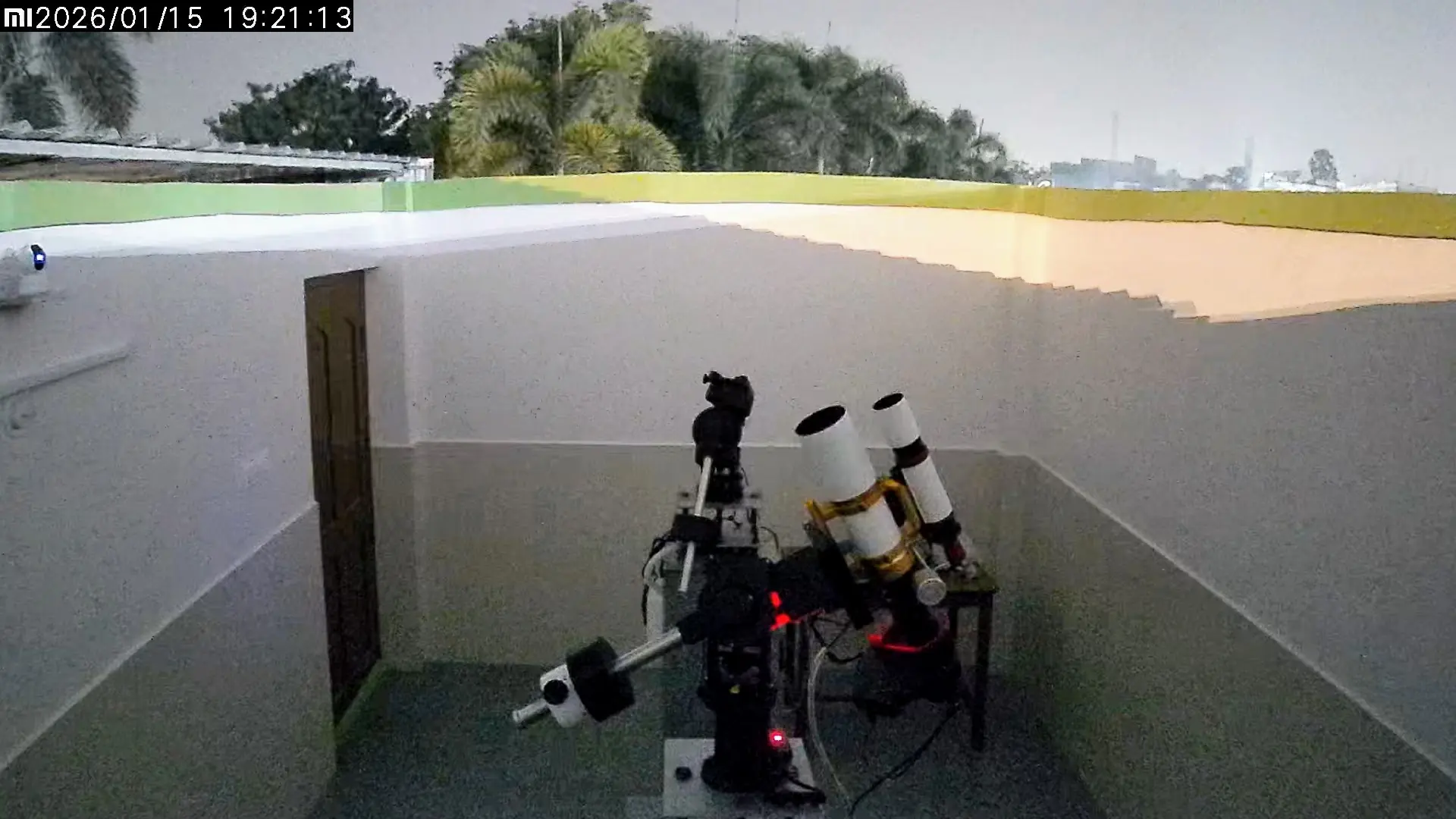
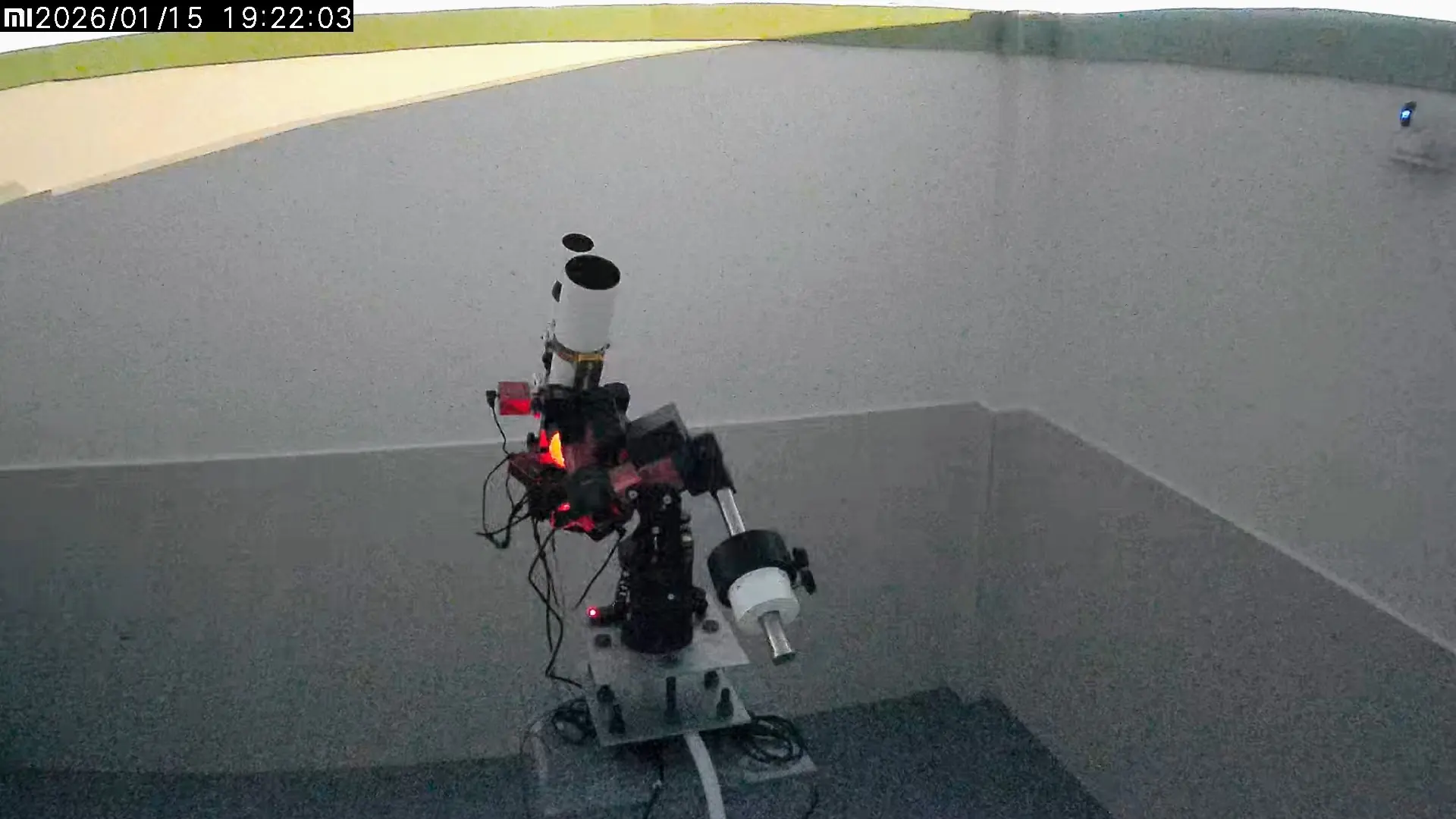
This 34.5-hour integration represents the first official processed signal from the new Bhagalpur observatory. Securing this depth of signal from heavily light-polluted Bortle 8 skies required a rigid acquisition strategy. Over the course of several weeks, I collected narrowband and RGB data using the William Optics 71GT APO and the ASI2600MM Pro. The primary engineering challenge was not isolating the bright cores of the nebulae, but lifting the incredibly faint, interconnecting emission gases out of the severe urban skyglow.
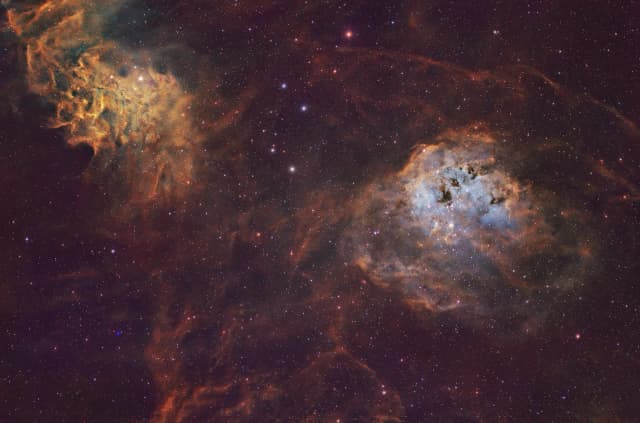
Mapping the coordinates across this wide field is necessary to establish the physical boundaries of the emission zones. While IC 405 and IC 410 dominate the frame visually, the astrometry highlights the dense background star clusters and the intricate gas filaments bridging the apparent gap between them. Establishing this spatial relationship provides the structural context required before analyzing the background material.
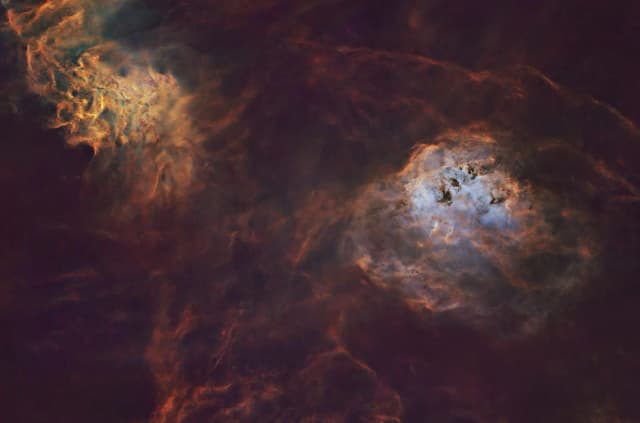
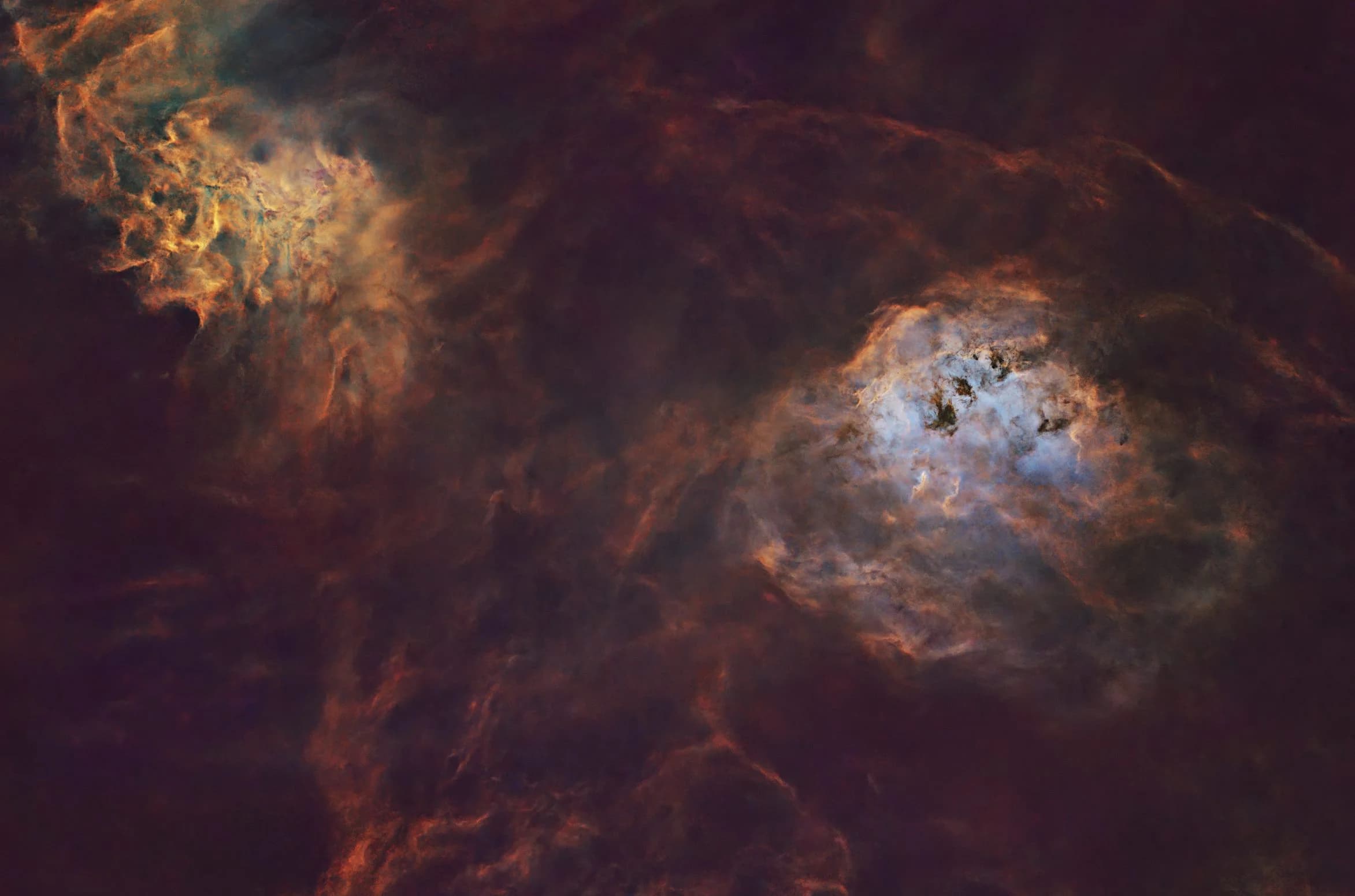
Because this region lies squarely within the Orion spur, the sheer density of foreground and background stars acts as visual noise. This broad-spectrum starlight heavily obscures the fainter, underlying interstellar medium. Mathematically stripping the stars from the widefield composite is not just an aesthetic choice, but a necessary analytical step. Without the overwhelming stellar light, the true structural integrity of the Auriga molecular cloud is revealed. We can trace the turbulent, interwoven gas filaments connecting the active region of IC 405 to the outer shock fronts of IC 410. Isolating this bare framework sets the stage for deconstructing the exact chemical signatures that make up the cloud.
Deconstructing the Narrowband Master Channels (SHO)
Building a highly resolved SHO+RGB composite requires isolating the ionized gases from the surrounding star field. By utilizing Optolong narrowband filters alongside 45 minutes of RGB data, we can accurately map the distinct emission zones driven by the massive stars in the Auriga complex while maintaining true stellar color profiles. Processing these master channels individually is critical to managing the severe skyglow gradients.
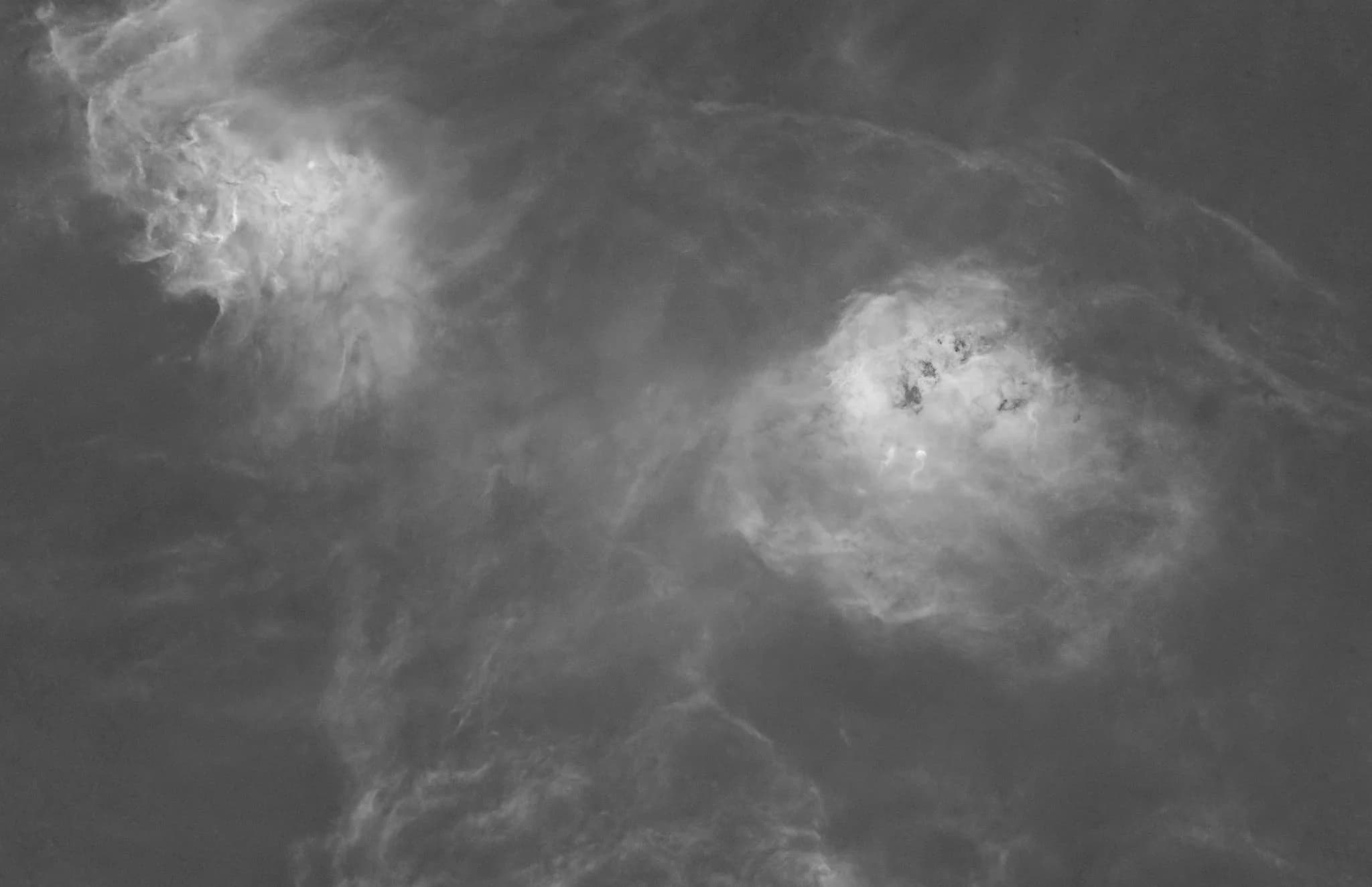
Hydrogen-alpha dominates the signal profile of the Auriga region. The immense ultraviolet radiation from nearby massive stars, specifically the young cluster NGC 1893 and the runaway star AE Aurigae, heavily ionizes the surrounding molecular clouds. This interaction generates the extreme density seen in the Ha master channel. It reveals the turbulent, wind-blown ridges of the Tadpoles and the massive, sweeping shock fronts of the Flaming Star.
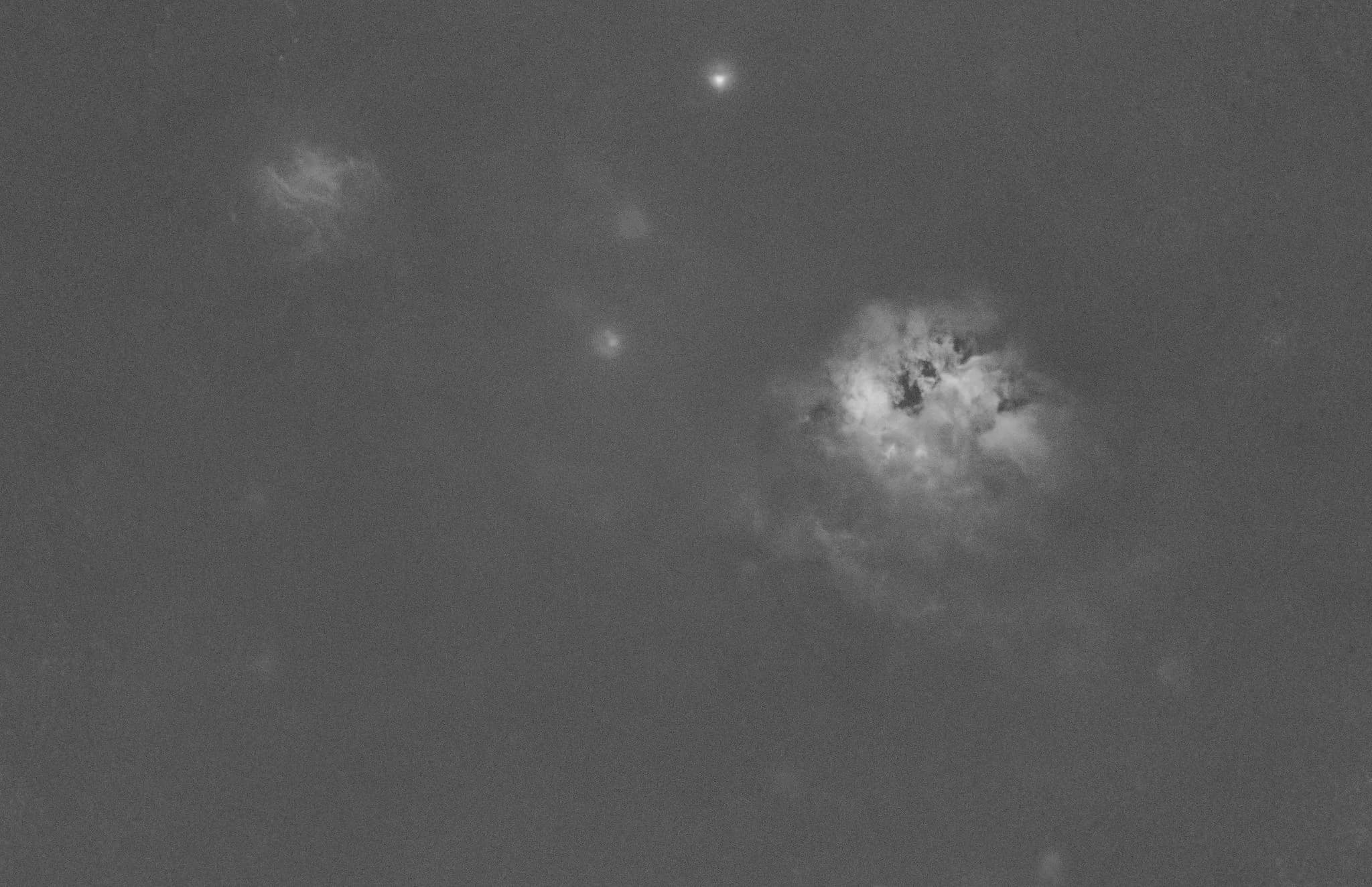
Oxygen-III emission requires significantly higher energy to excite, meaning it tightly maps the regions closest to the hottest stars in the field. In this widefield view, the OIII signal is highly localized rather than diffused. It forms a distinct, high-energy boundary around the core of the Tadpoles Nebula where the stellar winds from NGC 1893 are most intense, leaving the outer molecular clouds relatively void of this specific wavelength.

The Sulfur-II channel maps the cooler, lower-energy boundaries of the ionization fronts. Rather than simply acting as a color contrast layer, the SII data here traces the precise areas where the expanding shockwaves collide with the colder, denser interstellar medium. Capturing this specific transition zone from a heavily light-polluted urban environment requires exceptionally clean data.
The Flaming Star Nebula (IC 405): The Transit of AE Aurigae
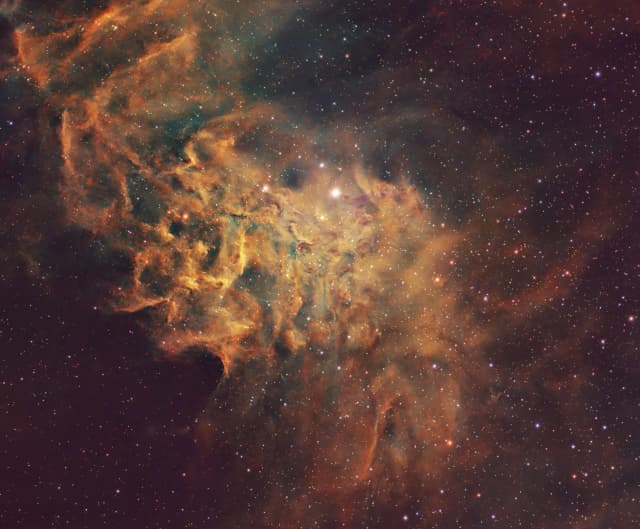

The Flaming Star Nebula (IC 405) presents a highly dynamic environment driven almost entirely by the presence of a single, exceptionally energetic object. The prominent central star, AE Aurigae, is an O-type runaway star. Astrophysical models suggest it was ejected from the Orion Nebula region approximately two million years ago following a multi-star collision. As it tears through the dense interstellar medium of the Auriga molecular cloud at high velocity, it emits intense ultraviolet radiation. This localized energetic output aggressively ionizes the surrounding hydrogen gas, generating the sweeping, turbulent emission structures visible across the field.
Analyzing the starless version of this crop isolates the complex fluid dynamics occurring within the gas. The intense stellar winds from AE Aurigae carve deep cavities and compress the leading edges of the molecular cloud, forming prominent shock fronts. Unlike typical emission nebulae sculpted by relatively stationary star clusters, the morphology of IC 405 is the direct result of a high-speed transit. The highly interwoven sulfur and hydrogen filaments trace the exact interaction zones where the intense radiation pressure continuously collides with the colder, ambient background material.
The Tadpoles Nebula (IC 410): Erosion and Stellar Winds
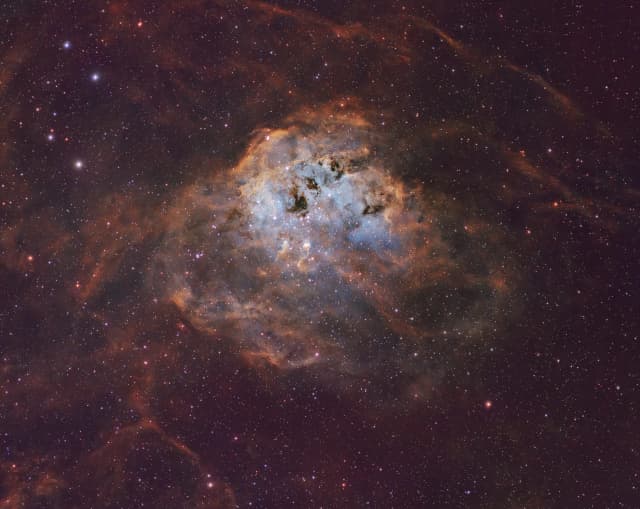
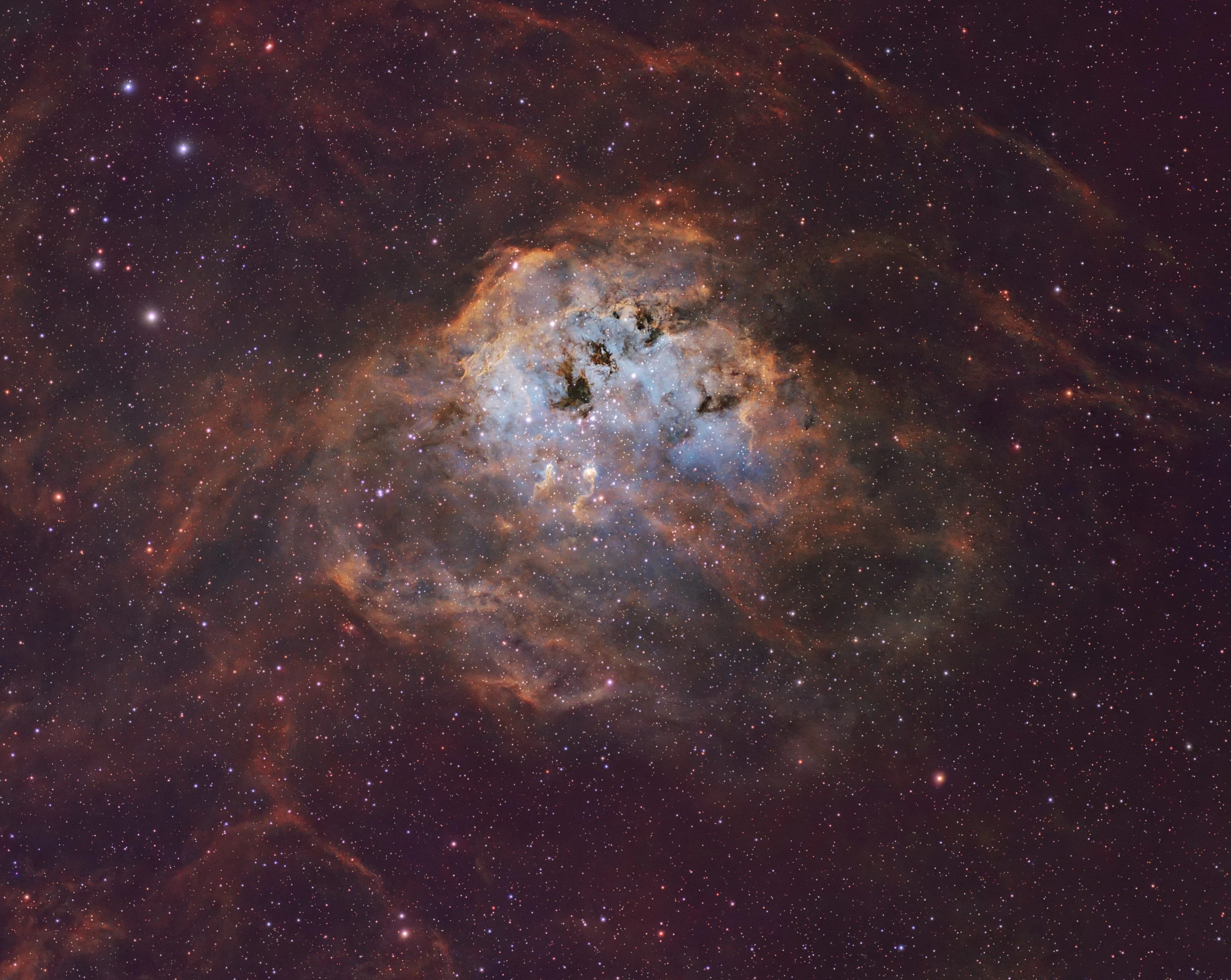
Located significantly deeper in the galactic plane than IC 405, the Tadpoles Nebula (IC 410) presents a classic emission environment sculpted by active stellar birth. At the heart of this complex lies NGC 1893, a massive open cluster containing extremely hot, young stars. The fierce ultraviolet radiation and intense stellar winds generated by this central cluster act as the primary engine for the nebula. This energetic output aggressively erodes the surrounding hydrogen-rich molecular cloud and excites the localized, high-energy oxygen-III boundaries we mapped in the master channels.
The namesake features of IC 410, the two distinct "tadpole" structures visible near the core, are incredibly dense, residual pillars of gas and dust. Stretching roughly ten light-years in length, these formations are robust enough to temporarily survive the abrasive radiation from NGC 1893. The heads of the tadpoles point directly toward the central cluster and harbor active regions of ongoing star formation. Meanwhile, the intense stellar winds physically blow the trailing material outward, sweeping the gas into long, luminous tails. Toggling to the starless comparison completely isolates these turbulent columns, allowing us to see exactly how the radiation pressure is actively carving out the core of the nebula.
- Integration
- 34.5 Hours
- Telescope
- William Optics 71GT APO (0.8x Reducer)
- Camera
- ZWO ASI2600MM Pro
- Mount
- iOptron CEM40
- Filters
- Optolong SHO, Optolong LRGB
- Guiding
- WO 50mm f/4 + ASI120MM
- Location
- Bhagalpur, India (Bortle 8)