First Light: The North Pier and the Tadpole Nebula
15 Jan 2026By Akshay Kumar
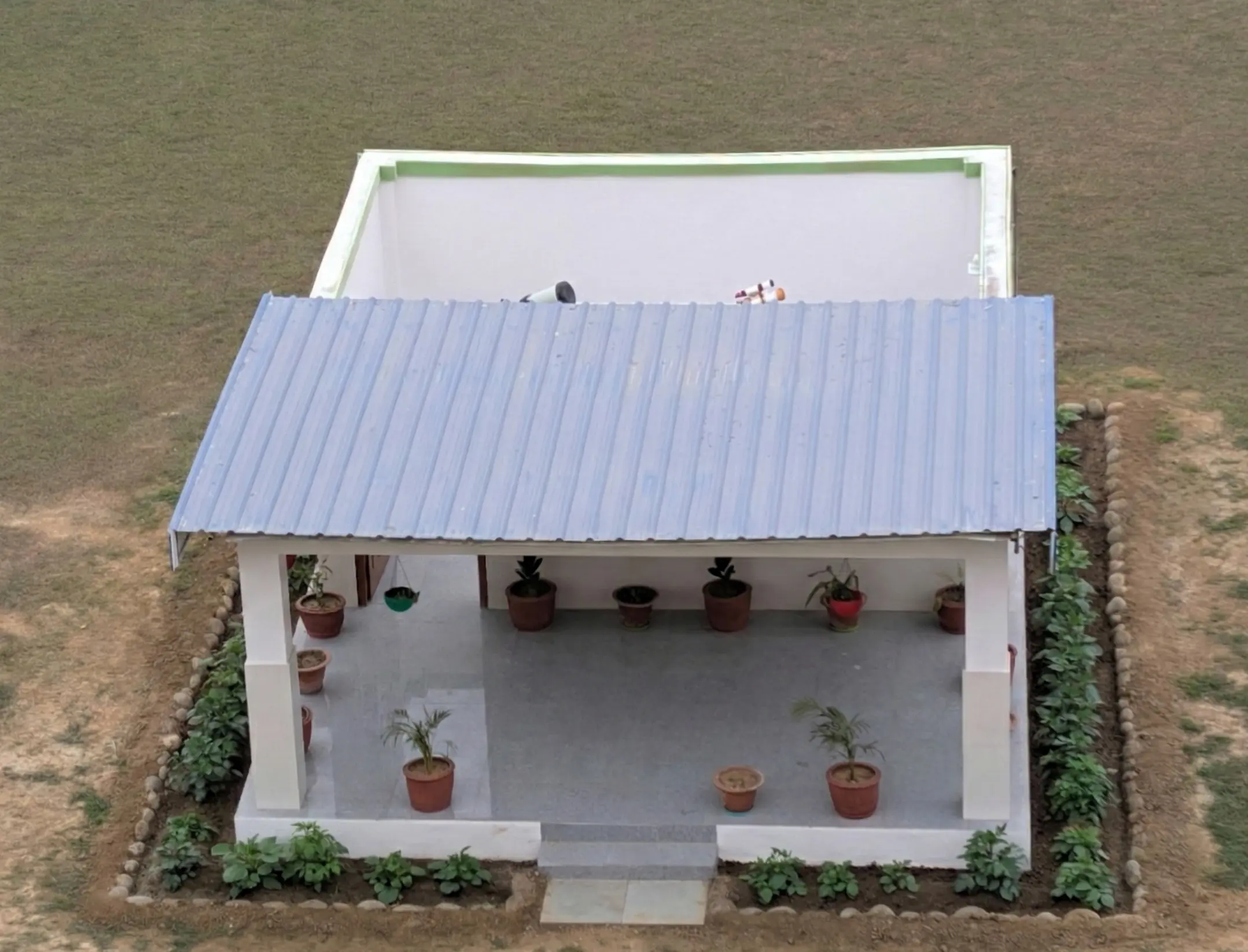
After months of planning, building, waiting, and troubleshooting, the observatory has finally seen first light. It did not arrive perfectly or effortlessly. It arrived honestly, earned through patience, persistence, and years of learning under the skies of Bhagalpur.
- Observatory
- Dr. Gopal Krishna Kunwar Observatory
- Location
- Bhagalpur, India (Bortle 8), Ready for remote operations
- Telescopes
- WO 71GT APO (and 0.8x reducer), Celestron C8 EdgeHD (and 0.7x reducer)
- Mounts
- iOptron CEM40, iOptron CEM70 WiFi
- Cameras
- ZWO ASI294MC Pro, ASI2600MM Pro, ASI676MC
- Guiding
- WO 50mm + ASI120MM, Celestron Off-Axis Guider + ASI220MM
- Software
- NINA, PHD2, Sharpcap, ASI Studio, Stellarium, Telescopius
- Accessories
- ZWO EAF, ZWO 5/7 Slot Filter, ZWO CAA Rotator
The North Pier, Proven Ground
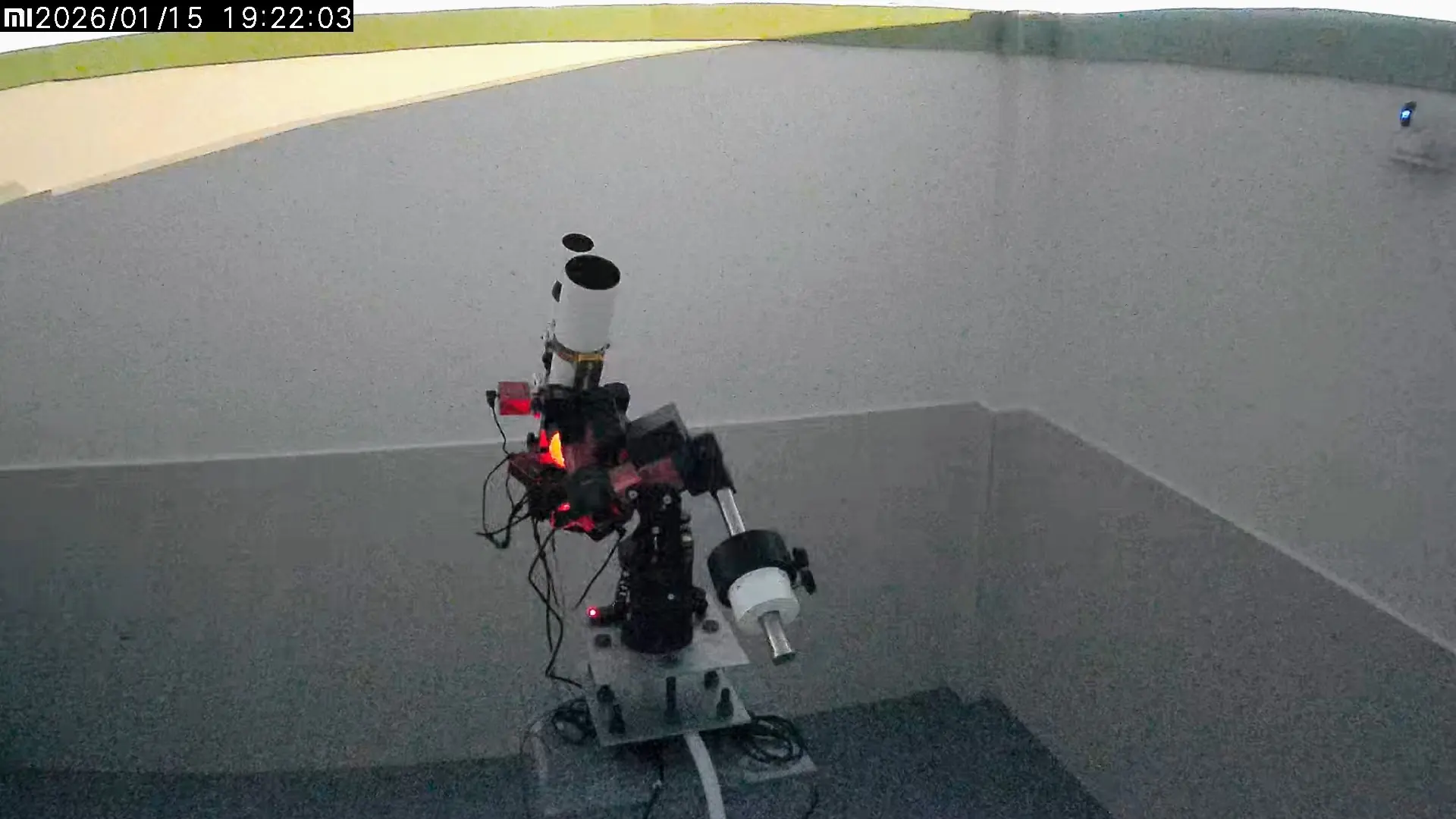
The north pier, the smaller of the two, was the first to come alive. It hosts the iOptron CEM40 paired with the William Optics 71GT APO and the newly added ZWO ASI2600MM Pro camera, alongside its full suite of accessories.
The CEM40 has tested my endurance for a long time. In many ways, this mount is where I truly learned astrophotography. I became intimately familiar with its quirks over the years. I learned its sensitivity to balance, its specific guiding behaviors, and the recurring focusing issues with the William Optics 50mm guidescope. Those problems were solved gradually through repeated nights of trial, error, and iteration.
That experience paid off. When the roll-off roof finally opened, this setup was immediately ready to go. Focus was reliable and guiding was predictable. The system proved its mettle by performing exactly as expected on the very first operational night.
The South Pier, Configuration and Integration
The larger south pier represents entirely new territory and contains the iOptron CEM70 WiFi. This mount is paired with the Celestron C8 EdgeHD telescope to form a high-resolution, long focal length imaging system. While the C8 is a demanding optical train, I felt confident in the meticulous integration. This specific configuration is the long-term workhorse of the observatory. Everything from the mechanical interfaces to the automation workflows needed careful attention during the initial setup phase to provide repeatable results.
Troubleshooting the Autofocus Disaster
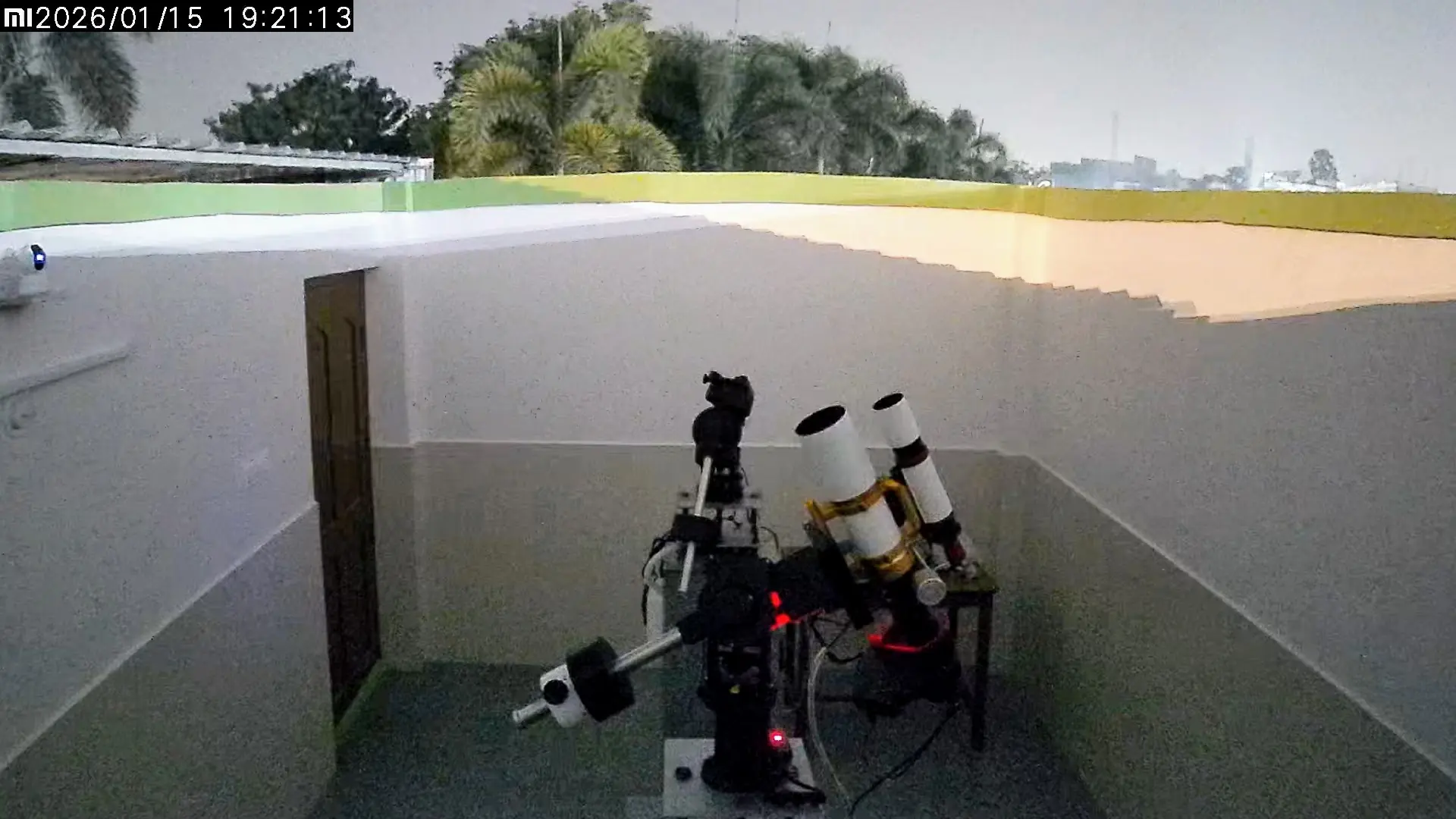
The meticulous planning was immediately countered by the autofocus failure, a completely unexpected disaster right at the start. My initial excitement quickly dissolved into dread as the focuser began behaving erratically. It refused to traverse correctly regardless of whether commands were issued via the physical hand controller, NINA software, or ASI Studio. Every platform reported the same failure to move, which pointed toward a mechanical failure. Eventually, the focuser jammed completely and entered an error state. This jam raised a genuine concern that the C8 EdgeHD's internal mirror-focusing mechanism itself might have failed. With work commitments preventing an immediate teardown, the entire system had to be placed on a forced pause, allowing the frustration to compound.
Weather, Waiting, and the Right Moment
The observatory had been physically ready long before first light. What held operations back was the weather. Cold, foggy nights and heavy ground-level condensation kept the roof shut for days. Dense vegetation and humid ground caused thick fog to accumulate right at grass level, even when the skies above appeared reasonably clear.
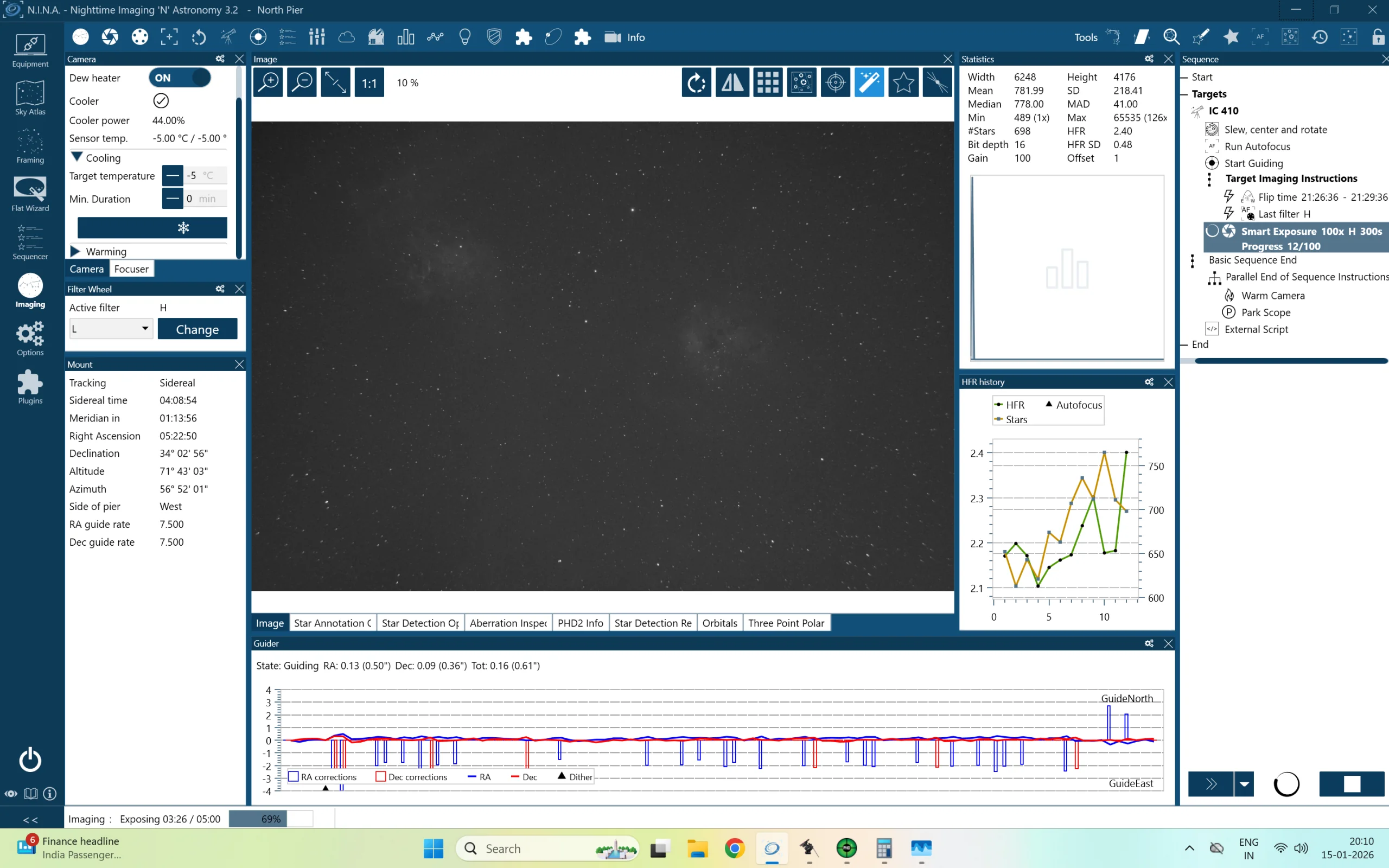
Over the last couple of nights, conditions finally aligned. When the shed opened, most systems came online immediately. Remote connectivity was solid, and VPN access worked right away. The telescope slewed, centered, and framed the target without fuss. A PHD2 calibration followed, and the NINA imaging sequence was successfully started.

This was also my first practical use of the ZWO Camera Angle Adjuster (CAA), allowing precise centering and orientation of the target. This marks an important milestone in moving toward fully controlled, repeatable imaging.
First Light Target, The Tadpole Nebula
For first light, I chose the Tadpole Nebula, framed in a wide-field configuration. The plan is deliberately long-term. I am aiming for 20 to 30 hours of total integration, using a strong mix of L, Ha, S, and O, along with RGB to properly capture star colors. The target remains well-placed in the sky from roughly 7:00 PM until about 3:00 AM. I am still learning the true horizon limits of the observatory, so these estimates will become more accurate with time and experience.
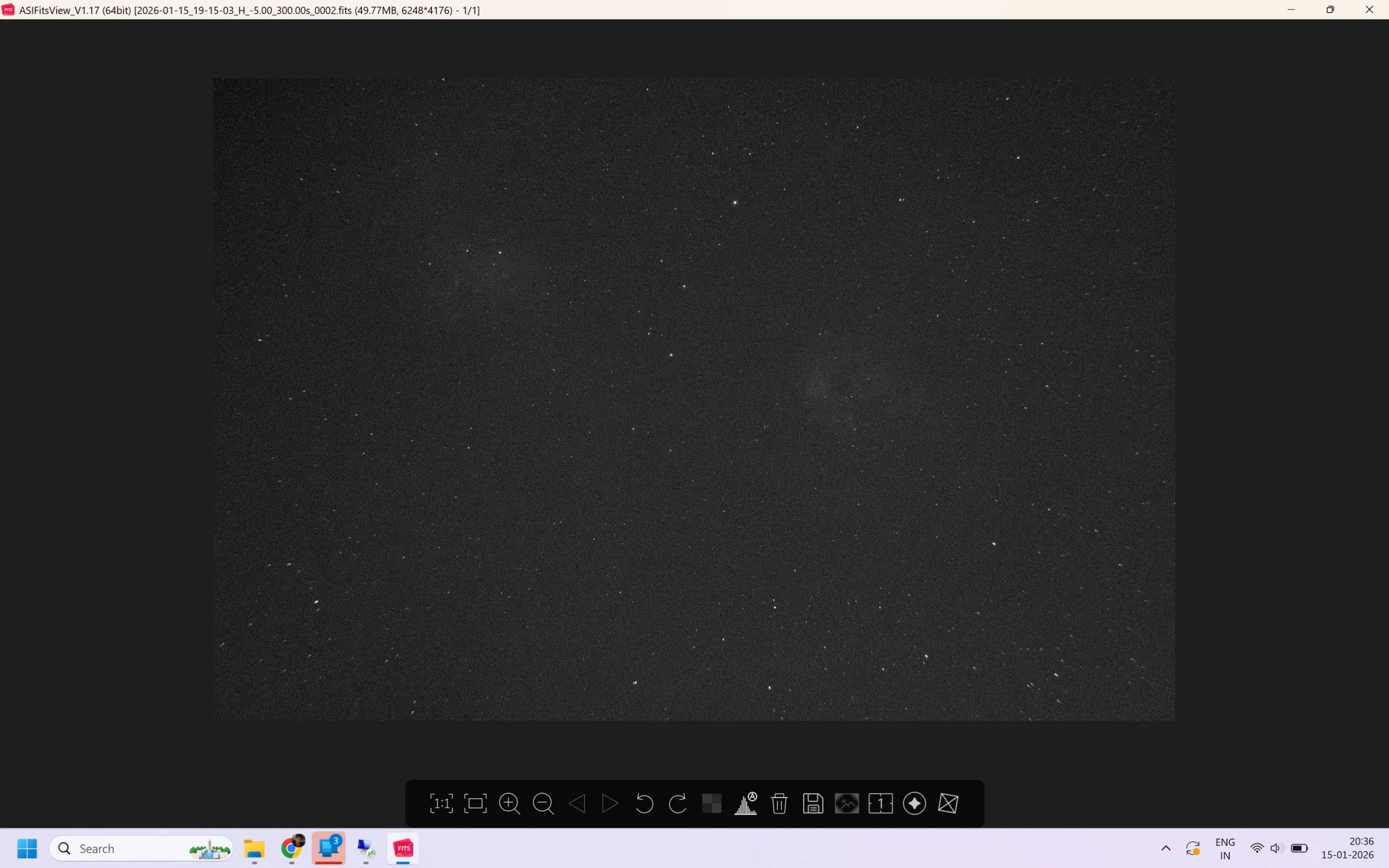
The initial data is intentionally left largely untouched for now. Proper processing will follow only after sufficient integration is collected. For the moment, the first-light frames stand simply as proof that the system works. You can view the results of this completed dataset in the fully processed Flaming Star and Tadpoles Nebula integration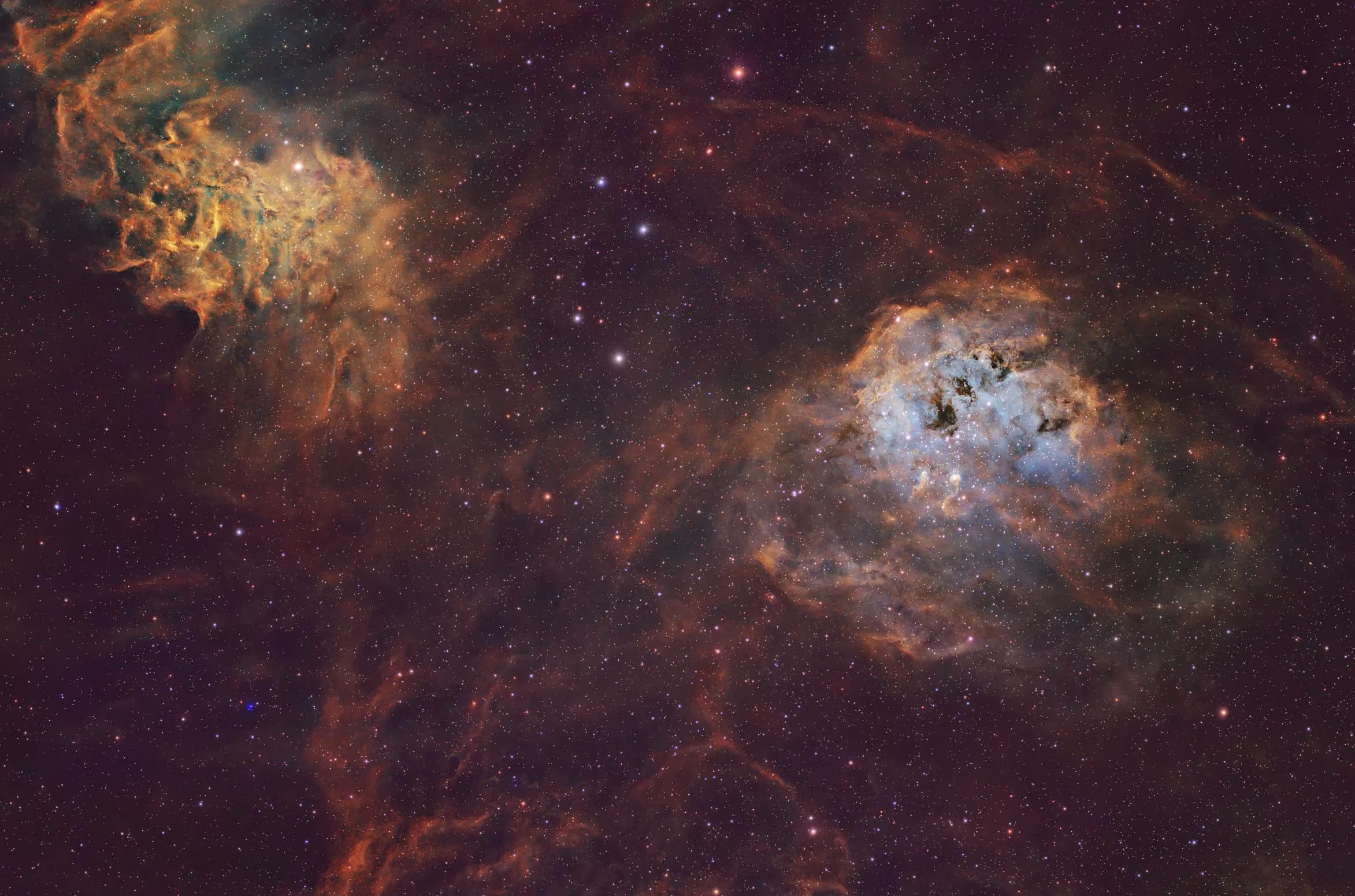 Processed SHO integration of the Flaming Star and Tadpoles Nebula in Auriga.
Looking Ahead
The most important milestone now lies just ahead. Getting the C8 EdgeHD back on the south pier is the priority. The EAF issue will require a DIY, or likely a replacement unit, which means the C8 is likely two to three weeks away from returning to the mount. When it does, it will mark the true beginning of the observatory’s next phase, bringing a far steeper learning curve. The C8, the CEM70, and their combined workflows will demand careful mechanical integration, precise collimation, new autofocus strategies, and guiding refinement at longer focal lengths.
There is also an important calibration milestone still ahead on the North Pier. Guiding RMS is currently hovering around ~0.8 arcseconds, whereas I used to consistently achieve ~0.5 arcseconds with the ASIAIR on similar setups. This is not a concern, only a reminder that tuning, corrections, and familiarity take time. With further tweaking in PHD2, better parameter optimization, and more nights under the sky, this too will improve.
Alongside this, there is still plenty to refine on the refractor side. I need to build reliable autofocus profiles per filter, dial in filter offsets, and master NINA automation for exact start and stop times. Creating repeatable workflows that allow imaging to continue while I am occupied with consulting calls is the ultimate goal.
That is exactly the journey this observatory was built for. It is not a finished product. It is a long-term companion. It is a place for learning, problem-solving, frustration, and quiet satisfaction. A place where patience compounds over time, just like photons.